Tag Archives: Books

New Review: Ink by Alice Broadway

32827036

A fantastic debut YA novel from author Alice Broadway, Ink is a brilliant story creating a world that at it’s heart is perhaps not so different from our own.

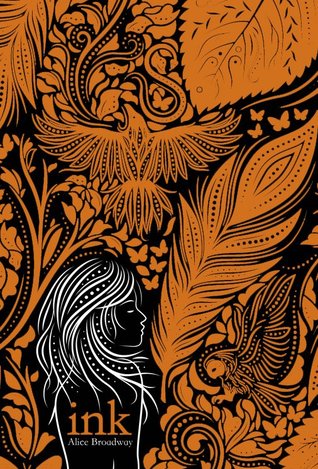
Ink by Alice Broadway

There are no secrets in Saintstone……Every action, every deed, every significant moment is tattooed on your skin for ever. When Leora’s father dies, she is determined to see her father remembered forever. She knows he deserves to have all his tattoos removed and made into a Skin Book to stand as a record of his good life. But when she discovers that his ink has been edited and his book is incomplete, she wonders whether she ever knew him at all.

In Saintstone, everyone carries a record of their lives on their skin.  That is, except for the Blanks, who choose not to have their skin marked and are therefore outcast. As is tradition in Saintstone, Leora’s father’s skin bearing the marks of his life in tattoos, will be bound into a book.  The soul weighing ceremony will then decide whether his life has been worthy enough for the book to be given back to the family and kept as a permanent memory.  Those found to be unworthy are forever destroyed; the ultimate shame and sorrow for any family.  It is whilst waiting for the date of the ceremony that Leora’s life and indeed her beliefs start to unravel.  Having lost the anchor that was her father, she now discovers that his life was not as blameless as she thought. Leora begins to question everything she thought she knew. She has the unusual gift of being able to ‘read’ others’ lives through their tattoos – sometimes revealing more than she wants to know about them. What lies has she been told? Are the beliefs as portrayed in the fables she has always held so dear really the truth?  If not, then perhaps even the foundations of society are corrupt.  Leora’s life becomes ever more unsettled, as she tries to decide where her future lies.

I loved this book.  Ink is a brilliant story; the kind of book that makes me love being a reader.  I picked it up and didn’t put it down until I’d finished it. Leora is a wonderful character whose voice comes through loud and clear enabling you to connect with her instantly through her thoughts, her actions and her relationships with others.  Leora’s relationship with her mother, her best friend Verity and even her employer Obel demonstrate the complexity of the many relationships we have in life and were brilliantly described. Life-changing events beyond Leora’s control cause her to reconsider everything – something I am sure we can all relate to.

The author creates a create a vivid picture of Saintstone and it’s customs. It was interesting to imagine how a society might look with everyone covered in tattoos. At first the idea of a ‘skin book’ made me feel queasy, but as you understand the significance of them as memories, you feel totally differently about the idea. They are a connection; a physical memory that can be ‘read’ again and again, and oddly this became quite beautiful.  It also raises interesting questions about the true impact of our life choices even from beyond the grave.  If we all had a visible record of our lives and choices, how would we ‘measure’ up? Can we ever really know the truth of a person’s soul? Who should decide if our lives have been ‘good’ enough? And of course, should those who choose not to live this way be punished?

“For the first time in my life, I’m doubting my faith, and it terrifies me. For the first time, I want to change the rules. For the first time I wonder: does it matter what it says on your skin, when what’s at stake is your soul?”  Leora, Ink.

Ink was full of moral choices and could spark many a debate about religion, prejudice and the fear of being ‘different’.  It describes a society in flux, with traditions and principles based on old fables or fairy tales and how we cling to these in difficult times.  But also how these can become a prison for so many. The extremes that some will go to protect and preserve tradition and use fear to control society are reflected on and create some stark choices for Leora.  For me what set this book apart was the huge depth the fables written into the story gave to the culture and the people in it. The importance of stories in the story is brilliant – as is the importance of art and creativity, which is beautifully brought to life throughout.  With some brilliant plot twists and nerve-racking moments, Ink is totally absorbing and I literally cannot wait for the next book.

Find out more at www.alice-broadway.com or on Twitter @alicecrumbs. You can read my interview with Alice here.  Thank you to Scholastic  for sending me a copy of Ink to review.

Spring special round up!

Spring time quote 3

I’ve had a lovely few weeks finding out just some of what’s new and coming soon from the world of children’s books.  Thank you to all those who’ve joined the blog over the last month and shared some book-ish inspiration; it’s great to see there’s so much to celebrate in the world of children’s and YA literature. We started with stargazing and ended with bananas and Beyonce!! With reviews, introductions to debut novels and author interviews, it’s been a busy month.

A snapshot of our spring special interviews:

“I want my books to feel ‘realistic’ and address genuine challenges, but I also want to them to entertain and provide a certain amount of escapism for the reader.” Jenny McLachlan, author.

“When you get right down to it, every child is different but they all deserve the chance to become readers” Hannah Rolls, Editor, Bloomsbury

“..I think hope is important, because stories can be there to guide us through difficult times. They are a light in the darkness, and so it’s important not to switch out the light.” Gill Lewis, author.

“I’m concerned about the ways our loyalty to our own group can mean refusal to empathise and understand others.” Alice Broadway, author.

“Throw all the bad stuff you’ve got at your main character… and then make it even worse.” Simon James Green, author.

“Publishing is the most glorious random thing; no one really knows what will be ‘the next big thing’!” Rachel Hickman, author & Deputy MD of Chicken House

“Writing is a skill like any other–one which you get better and better the more you do. If your first attempt doesn’t quite make it, try again.” Hayley Barker, author.

“There’s so much to learn from hearing authors speak live about their writing, their influences and their experiences.” Victoria Henderson, Director of Chiddingstone Castle Literary Festival.

With an ever growing TBR shelf, look out for lots of new reviews coming soon!.  Thank you to all the publishers for sending me these books to review:


Author Interview: Simon James Green

9781407179940.jpg

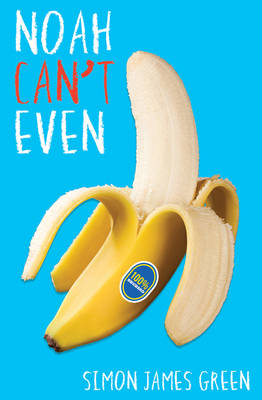
Simon James Green is the author of Noah Can’t Even, a story described as “snort-laugh-out-loud” funny!  Simon was an Undiscovered Voices finalist in 2016 and is also a screenwriter and director; Noah Can’t Even is his first novel and will be published by Scholastic on 4th May.  I’m delighted to welcome Simon to the blog today; thank you for joining us!

You can’t help but smile when you see the cover of ‘Noah Can’t Even’! Tell us what the story is about. It’s a funny, sweet, coming-of-age (and coming out) story about learning to be brave enough to be yourself. On the cusp of his 16th birthday, Noah longs to be accepted by his cool classmates. He thinks one way to social success might be to kiss Sophie, the most fabulous girl in the school. But Noah’s plans go awry when his best mate, Harry, kisses him instead and a chain of events is unleashed that turns Noah’s life upside down – with laugh-out-loud consequences!

What was the inspiration behind the central character Noah? Admittedly, there’s quite a lot of me in Noah. We both grew up in small towns and I certainly wasn’t one of the cool kids at school either. We also both have slightly geeky obsessions with Agatha Christie, although I must point out that my mum has never done a Beyoncé tribute act! Growing up is all about working out who you are and what you want to be, and sometimes that takes a certain amount of bravery. I wanted Noah to be dealing with those types of issues and be battling with feelings that he couldn’t (or refused to) understand. Noah worries about fitting in; he has that need to be accepted and liked, and he ties himself up in knots worrying about what people think about him. You eventually reach a point in life where you couldn’t give a damn about any of that, but for Noah, it’s a very real concern. Finally, when I think about my own teenage years, and when I think about why I love writing about this age group so much, it’s the fact so much of what you experience feels heightened. That’s probably because you’re being faced with a lot of things for the first time and you don’t always have the experience to know how to deal with it and know it’ll all work out OK. As a result, you make rash, irrational and sometimes plain crazy decisions. Of course, making those mistakes is how you learn, but in the meantime, it’s often comedy gold! (Although at the time, I definitely was not laughing!)

You were selected for the SCBWI’s Undiscovered Voices 2016 – this must have been very exciting; how did this come about? UV was such a fantastic experience! Two people really encouraged me to apply – my friend, the author Katie Dale, and my editor at the Golden Egg Academy, Jenny Glencross. I sent in the first two chapters and was staggered when I was not only long-listed, but then was actually one of the winners who would be included in the anthology. From there I was contacted by over 20 agents in both the UK and USA, who all wanted to read the full manuscript and within 7 months I’d signed with Jo Moult at Skylark Literary and had a book deal with Scholastic. I mean, it’s a fairy tale, right? It was such a fast, exciting, roller coaster of an experience and I’m so grateful to everyone at UV for everything they’ve done for me. And, to you all writers out there looking for rep, UV is open for submissions for the 2018 anthology, so get submitting – it’s life changing!

How has writing your first novel differed from writing screenplays? One of the key differences is all the extra stuff you need to put into a novel. With a screenplay, you generally allow the actor to interpret the lines and action in order to show the audience how they are feeling and what’s going on for them internally. With a novel, you need to get that on the page a lot more, and that was a big challenge for me at first. I’m also used to a much faster turnaround time with screenplays (I once had to do a rewrite in 48 hours), so it was lovely being able to work on the manuscript for longer than I’m used to.

As a coming-of-age novel, what do you hope readers will gain from reading Noah Can’t EvenFirstly, I really hope people have a good laugh reading Noah Can’t Even. I’m a big fan of funny books and I hope that when the humour in Noah is combined with some of the sweeter moments, it’s a book that gives you all the feels. And that’s what growing up is all about, right? You laugh, you cry… you screw it all up and make it all better again. I hope people read it and think – ‘that’s OK, what I’m going through isn’t completely weird and unusual then.’ But fundamentally, I wrote Noah for the same reason I write screenplays or I direct for stage and TV – I enjoy entertaining people and I hope it makes them happy.

The audience for YA novels is growing, which is great news for all concerned not least those reading the books! Were you a reader when you were a teenager? Yes, massively! I loved Agatha Christie as a teen and read loads of her books, but I also devoured Adrian Mole, The Catcher in the Rye, and most of Stephen Fry’s books, to name just a few of my favourites.

What is the best piece of writing advice you’ve ever received? Throw all the bad stuff you’ve got at your main character… and then make it even worse. That’s exactly what I’ve tried to do with Noah – in every chapter I turn the screws just a little bit more, until he’s basically in an impossible position. It’s a great way to drive the story, up the stakes and keep the reader interested!

And finally….have you got a thing for bananas and Beyonce?! Hasn’t everyone?! Actually, I think ‘Bananas and Beyoncé’ would be a great title should I ever write my autobiography!

Thanks so much Simon for sharing your experiences with us. We wish you every success with Noah Can’t Even!

Find out more at www.simonjamesgreen.com and on Twitter @simonjamesgreen.

Spring time quote

Author Interview: Hayley Barker

Show Stopper.jpg

Hayley Barker’s debut novel Show Stopper will be published by Scholastic on 1st June 2017.  Described by her editor, Lauren Fortune, as “dazzling and dark, heartbreaking and heart-racing” Show Stopper is a YA novel set in a dark and not so death defying circus.  I’m very excited to welcome Hayley to the blog today to tell us all about her new novel and the inspiration behind it.  Thank you for joining us today Hayley!

Show Stopper sounds thrilling – I’m looking forward to reading it! Tell us about your inspiration for the book. Thank you so much! When I was younger, I loved reading circus stories. The circus always seemed to be an almost magical place, one which operated outside of the normal rules of society, and the life the circus folk lead was so exciting -free and wild and wonderful. Because of that, I had been thinking for a while that I would really like to write my own story set in the circus.

When I started writing Show Stopper, there were lots of reports in the media about the growing wave of hostility towards ethnic minorities and immigrants in England. Groups with extreme right wing views were gaining momentum, not just in England, but across Europe, and the right wing press was becoming more and more vocal in its suggestions that the faults of the country all lay at the hands of immigrants. It made me feel worried about where we were heading and I wanted to try address this concern in some way in my writing. The two ideas merged in my mind and the concept of a truly terrible circus, which is far from magical, was formed.

You’ve chosen a unique setting for the novel. What research did you do to inform creating the setting of a circus? It must have been fascinating! I read a few books about the traditional circuses of the past and researched anything else I needed to know about as I was writing. If anyone was to look at my internet search history, there would be some bizarre and slightly disturbing results on there! Subjects I’ve researched include, medieval torture methods, how Tasers work, ways in which the Nazis used the body parts of people they had exterminated in the concentration camps, and traditional and extreme circus acts. In the book, Hoshiko balances a stool on the high wire and then stands on it. Believe it or not, this is not only possible but has been done before – you can watch someone do the very same thing on Ukraine’s Got Talent on YouTube!

Tell us about Show Stoppers’ protagonists – Ben and Hoshiko, who have very different backgrounds.  Ben is a Pure, one of the leading elite in the country. His mother is a really important political figure with leadership aspirations, and he is surrounded by people who hate the Dregs– the suppressed underclass of Immigrants and ethnic minorities. He befriends a Dreg servant, Priya, and begins to question everything has been told about the Dregs being inferior. When he goes to the Cirque and sees Hoshiko, he is captivated by her and determines to rescue her from her terrible fate.

Hoshiko is the star of the show, a brilliant high wire and trapeze artiste. She has been witness to the torture and murder of many of the people she cared about and she herself experiences horror on a nightly basis. She is fiercely loyal to her friends in the circus and feels trapped and embittered about the life they are forced to lead, and angry and resentful towards the Pures. When Ben tries to befriend, and then rescue her, she is far from grateful, but slowly comes to see that not all Pures are prejudiced and cruel.

Did you always intend on including a romance or did that evolve? I did always want the story to have a romance at its heart. I felt like a lot of YA fiction included love triangles or one-sided relationships. I wanted a Romeo and Juliet style love story, one about love at first sight which becomes deeper, a love which redeems and heals. The overall message of the novel is that love is stronger than hate, and that we can always change things if we are determined enough. I think that message, while certainly not a new one, is important and true.

You’ve been a secondary school teacher for 18 years. How has this helped you in terms of your insight into writing for a YA audience?  I think any good teacher needs to be able to relate to and understand the people they teach. Young adults don’t deserve to be patronised, they have real concerns and worries and they think deeply at the world they live in. They don’t want to be lectured to and like stories which have a dark and sinister edge. They want page-turners– books which keep them hooked from the start. That was what I tried to achieve when I was writing Show Stopper.

As a debut author, what are your three top tips for anyone starting out on the road to trying to get a book published? My first tip is to believe in yourself: believe you can do it and try, try, try. I think the difference between a pipe dream and an ambition is simply the action you take to fulfil it. The minute you commit to a plan, and do everything you can to achieve it, your dream becomes an ambition – one which is possible and achievable.

My second tip links to the first and it is to keep going in the face of rejection. Writing is a skill like any other–one which you get better and better the more you do. If your first attempt doesn’t quite make it, try again.

My third tip is to go to the Winchester Writers’ festival, or another similar event. I went when I had completed the first draft of Show Stopper and booked four incredibly useful 1-1 appointments with literary agents. Not only did it ensure that that they had all looked carefully at my writing, but I also got lots of illuminating and useful feedback. All four agents were positive about my writing and wanted to see more, which was a real boost and I also got some excellent tips for further improvement.

Thank you Hayley for these fantastic tips and sharing your writing experience with us.

Follow Hayley on Twitter @HayleyABarker.

flowers 2


Perfect picture books for tiny countryside explorers!

Just in time for spring! These two lovely new picture books from Nosy Crow and The National Trust are all about encouraging young readers to look and see in the countryside.

-National Trust- Colours, A Walk in the Countryside-247084-1

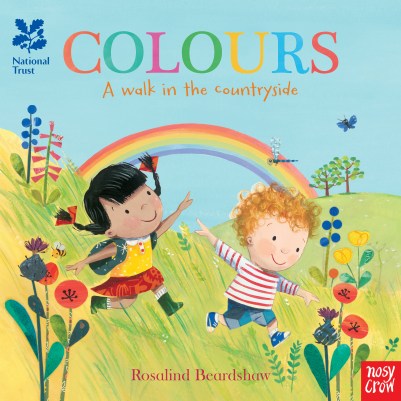
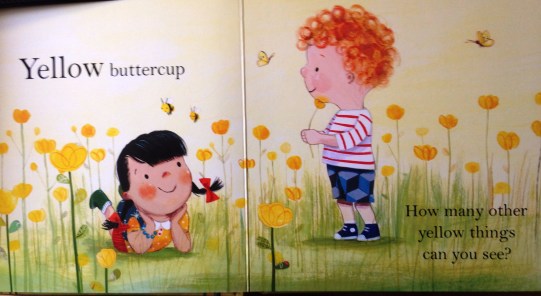
Colours: A Walk in the Countryside by Rosalind Beardshaw, features a little boy and a little girl going for a walk and seeing what colours they can spot. On each page, a colour is identified and then the reader is encouraged to see what else they can find in that colour. With cheerful and vibrant illustrations, the two lovely characters and all the creatures they meet are brought to life on the lovely ramble through the countryside.

nosy-crow-11.jpg

The final page brings all the colours together and young readers will delight in seeing what they can find for every colour of the rainbow! It’s an interactive read that could easily be reflected on your next walk through the countryside, encouraging children to notice the wonderful nature and wildlife all around them.


Look_Say_Farm_cvr_FINAL.indd

Look and Say what you see on the Farm by Sebastien Braun is a lovely and informative book encouraging youngsters to join in with animal sounds, spot various farm objects and practice saying words together. Interactive seek and find elements add will keep little ones thoroughly engaged and they’ll learn all about life on the farm.

farm 3

The illustrations are bright and lively and each page describes the role of the different areas of a farm; from milking the cows to bee-keeping. Lots of questions will get the reader thinking and make this is a lovely book to share!

With a clear font and accessible vocabulary, Colours: A Walk in the Countryside and Look and Say what you see on the Farm could be enjoyed by very young children and those just learning to read. Perfect springtime reads, they would make a great addition to any young reader’s bookshelves.

For more information visit www.nosycrow.com or www.nationaltrust.org.uk

With thanks to Nosy Crow for sending me these books to review.