Tag Archives: Books

Editor Interview: Hannah Rolls on Bloomsbury High Low Fiction

flowers 2

I’m delighted to welcome Hannah Rolls, Editor at Bloomsbury who works on the brilliant Bloomsbury High Low books.  Published this spring, the series aims to encourage and support reading practice by providing gripping, age-appropriate stories for struggling and reluctant readers, those with dyslexia, or those with English as an additional language. The High Low series is produced in association with reading experts at CatchUp, a charity which aims to address underachievement caused by literacy and numeracy difficulties.

Hopewell High, The Street, Mission Alert and Skate Monkey are four new series in the High Low range offering exciting and dynamic stories. Each title is printed on tinted paper with a dyslexia friendly font and a recommended reading and interest age. Thanks for joining us Hannah!

Tell us a bit about your role at Bloomsbury. I look after the educational fiction list. That means I’m always on the lookout for stories which might be useful in schools – either to help children who are learning to read or to tie into topics they will be covering. My job includes a bit of everything: negotiating contracts, editing manuscripts, writing briefs for illustrators, talking to teachers about what they need, wandering around bookshops to see what is going on in the world of children’s books…

high low bloomsbury

The High Low series is great! Can you tell us a bit about the series and what makes these books more accessible than standard paperbacks? We know there are loads of children out there who struggle with reading – because English isn’t their first language, because they have dyslexia or another special educational need, or just because they didn’t ‘get’ it when all their peers did. But poor reading skills have a massive impact on children’s chances in life – struggling to read is closely linked with low pay and unemployment.

So, to try and help tackle this problem, the High Low series was developed so that the interest age of the books is higher than the reading age (you can see both printed on the back near the barcode) so that children who are struggling with reading don’t get stuck with books they find babyish or boring. The typeface we use is one that is recommended by the British Dyslexia association so it is really clear, and we also use cream paper to improve things for anyone with Irlen syndrome or other visual problems associated with dyslexia. We look carefully at the plots and the language to make sure they will be readable and engaging to our target audience and we try to keep the books quite short so that everyone can get the satisfaction of finishing a story!

How do you go about commissioning the High Low books? First, I looked at what other children that age would be likely to be reading. I was really keen that we should cover a wide range of different genres and that if their friends were all reading the latest superhero or spy book, that we would be able to give the struggling readers something that looked cool in the same way.  We don’t have every genre covered yet but I hope we will soon.

Then, I talked to some authors (some I had worked with before and some I hadn’t) about what they might want to write about and tried to match that up with things I knew were popular. I also did some research into what can help struggling readers, and had a lot of meetings with the design and production teams about typefaces and paper!

The series was produced in association with CatchUp; what was their role? CatchUp are key in making sure everything is as tailored as it can be for struggling readers. They have experienced teachers who act as language editors for me – they spend a lot of their time working with struggling readers so they can advise on whether a sentence structure is too hard, if a particular word or plot twist will be sensitive in schools, and even a word has gone out of fashion in the playground! They also took a close look at design of the series and the font to help us make sure we got that right.

And finally, what do you think is the key to successful books for children/young people with specific learning needs or who are reluctant readers? I think the key is to remember that they aren’t all the same – some of them will think it is the coolest thing ever that a giant octopus fights an underwater dragon in Skate Monkey: Fear Mountain whereas some of them will be engaging with the emotional struggles of the girls at Hopewell High… Some of them will be struggling because they are newcomers to the English language, some will have specific difficulty and some will just have found books a bit boring! I always try to make our books as … as possible: as funny as possible, as exciting as possible, as dramatic as possible, and so on. When you get right down to it, every child is different but they all deserve the chance to become readers.

Thank you Hannah for sharing some insight into your work and about the High Low Fiction series.

For more information visit www.bloomsbury.com

Spring time quote

Libray-versary: a decade in school libraries!

This time ten years ago I took my first steps as a School Librarian. I can’t actually believe it’s been ten years.  It was never my plan to work in a school library, dare I say it?! But I’ve always been a reader and always loved books. I loved visiting the public library as a young girl, taking out as many books as I was allowed, devouring them one after another.  This was where I discovered some of my favourite authors –  causing a few raised eyebrows as I took out virtually an entire shelf of books by the same author!

I’d had various ideas about what I wanted to do when I grew-up, but as is often the case life happens and plans change or adapt.  When I did my degree, I recall thinking the Classification unit was really quite boring and I would avoid the Dewey System if I could…! I worked in events management initially after University and as a ‘born organiser’ (as my parents would say), this suited me very well and I loved it.  The arrival of children meant it was difficult to balance this career (late nights, long days and lots of travelling) with parenting and this is when I applied to work in a local school in the library. I will admit like many who are attracted to working in schools, the hours and holiday times were well-suited to family life. But little did I know this would lead me to discover a brand new career and rekindle my passion for books.  Not that I had ever stopped reading; I hadn’t, but I had never thought about sharing and encouraging others to discover a love for reading, beyond my book group.

It was a huge culture shock going from industry to working in a school. After six weeks I had a complete panic and went to see the Personnel Manager to discuss handing my notice in.  She was brilliant – kind and reassuring and encouraged me to stick with it till the end of that term, saying that many people who come from industry find it a big adjustment.  She also sent me on a training course  all about how to run a school library.  This was a huge turning point for me.  I suddenly realised the value of the job I was doing and will never forget what the man running the course said:

“You can either be the person who sits behind the desk stamping books or you can effect real and positive change in the lives of the children who walk through the school library door.”

It was definitely a light bulb moment for me. Up until that point, I had felt that I had no real purpose other than to look after the very dusty and underused library space, stop students from misbehaving when they came in for the odd lesson and issue the occasional book. I went back to school with a new focus: I was going to revamp the library and make it a hub of activity! A place where students couldn’t wait to be; where they felt supported; where they were inspired and most importantly, a space that celebrated and enabled the discovery of the joy of reading.

Quite a challenge in a library that had had little love or attention for many years!  But despite this, I did achieve a huge amount, working with some great people, of which to this day I feel very proud.  I was able to make good use of the skills I had learnt in running events, marketing and PR. At its simplest level, I saw the library and books as the ‘product’ and the students and staff as my target audience.  It was just a case of working out the right sales pitch amongst other things!

This first experience stood me in good stead throughout my career and I’ve had the rewarding task of revamping nearly all the libraries I’ve worked in.  I’ve learnt a huge amount over the last decade. Not just in terms of running a library; but also working with children, school staff and parents; in teaching and learning; understanding special needs; general education issues; managing a team and a myriad of other things I’d never even thought about.

Without the wider support of those working alongside you, a school library (and the librarian) can quickly become obsolete.  I’ve collaborated with some amazing teachers, teaching assistants and fellow librarians, who have been fundamental to ensuring the success of the libraries I have worked in. I’ve also continually developed my understanding of the importance of reading to a child’s development across all areas of their lives.  I realise how incredibly blessed I was to discover a love for reading at a young age (thank you Dad) and have it come completely naturally to me.  And now even more, I realise that it was a lot easier to grow-up when I was young; these days children have so much to deal with and as school librarian I feel a huge sense of responsibility in supporting young people in school. It’s this that keeps you going when you’re having one of ‘those’ days.

Since that first day, I have worked with nearly 7,500 children ranging from two to eighteen years.  It is a unique position to be in, interacting with the entire school community. In a single day, librarians can be teaching and supporting upwards of five different curriculum subjects for a range of ages, taking book groups, running reading campaigns, recommending books to individuals, writing school policy, as well as the general administration of the library. Add to that the role of tutor in my current position to a group of Year 8 boys and it’s busy!  Perseverance is key as are good working relationships. It is absolutely a full time job and should never be underestimated; but it’s also totally rewarding.

This career has led me to some wonderful things, not least founding The Book Activist. I’ve had the absolute pleasure of sharing my love for reading and been able to read hundreds of wonderful books ‘for work’! I’ve faced challenges in ways I couldn’t have imagined and I’ve had moments of fulfilment that I will never forget. I’ve been fortunate to work with some lovely people and made some friends for life. So on my library-versary, it’s a good time to thank all of those who have supported, inspired and encouraged me. And to thank all the many children who have made my job so rewarding.  And of course, all those amazing authors, illustrators, publishers, editors and brilliant book-ish people who create the stories we love.  I don’t know where the next ten years will take me, but I expect if books and reading are involved, it’s going to be brilliant!

signpost


Sophie Finds a Fairy Door by Laura Sheldon, illustrated by Erica Jane Waters

51qHLNxfDgL._SY351_BO1,204,203,200_

Sophie Finds a Fairy Door by Laura Sheldon illustrated by Erica Jane Waters

Tidying her Teddies, Sophie finds a secret fairy door hidden in her skirting board. Before she knows it she is flying through fairyland, where she is just in time to save the fairies day.

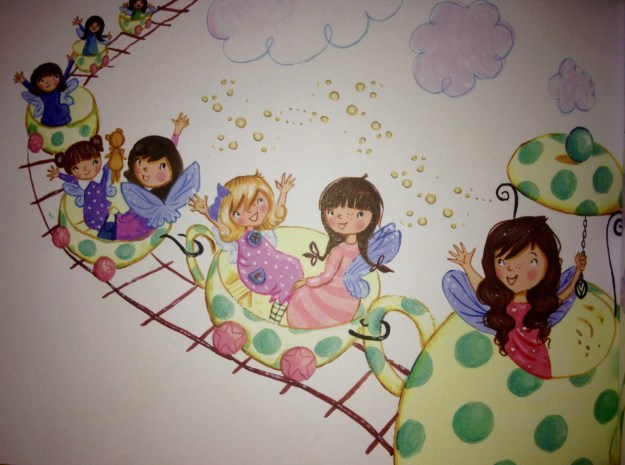
When Sophie uncovers a magic fairy door, she is taken on a magical adventure through fairyland with a beautiful fairy called Bella.  Sophie cannot believe her eyes as she sees the fairy world, and even grows some fairy wings of her very own. And when the fairy tea-cup train is in trouble, it’s Sophie who comes to the rescue and finds out how to get the train working again.

Fairy 2

Well I will admit my smile grew bigger and bigger as I read this gorgeous rhyming story with fairy magic galore!  Sophie Finds a Fairy Door is a charming book and I can just imagine all little readers falling in love with Sophie, Bella the fairy, and their fairy adventures. The lyrical narrative carries you on a cloud of fairy dust and makes it a lovely story to read aloud.  There’s just enough excitement to keep readers captivated, with the opportunity for Sophie to literally put the power of her dreams to the test. I love the use of imagination as the key to solving the problem! The story takes me back to childhood days of hoping I’d discover a fairy living at the bottom of the garden or a door leading to a secret magical world.

Fairy 1

The delightful illustrations beautifully bring to life the fairy world and all its inhabitants. Published in March by Firefly Press, Sophie Finds a Fairy Door is perfect for all those little ones who dream of make-believe magical lands and hope to have a magical visitor one day. Although, be warned, this is the first in the series and once you ‘let the magic into your home’ you’ll be hooked!

Find out more at www.fireflypress.co.uk and on Twitter @LauraSheldon76  and @Ericajanewaters.

With thanks to Firefly Press for sending me a copy of this book to review.

spring time quote 2


Author Interview: Alice Broadway

32827036

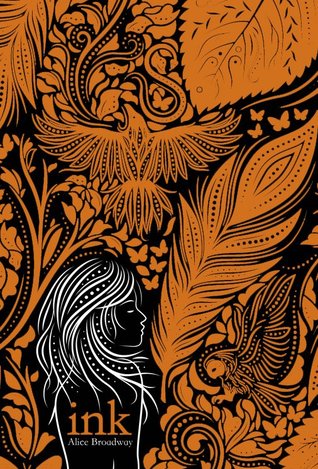
I am absolutely thrilled to welcome the author of the Ink, Alice Broadway to the blog.  Alice is sharing some of the ideas and inspiration behind her brilliant debut novel Ink and the writing process in general.  Thank you Alice for joining us!

I just have to say this loudly – I LOVED INK! Couldn’t put it down. For the benefit of those poor people (!) who haven’t read it yet, tell us a bit about it. That makes me so happy – thank you! Ink is set in Saintstone: a world where all your good and bad deeds, all your successes and failures are tattooed onto your skin. Everyone can look at you and know all about you. The purpose of life in Saintstone is to be remembered after you die – and only the worthy deserve this honour. If you are counted worthy after your death your tattoos are preserved in a skin book for your family to keep forever. Ink tells the story of Leora who is sixteen; her Dad has just died and when she looks at his skin book she realises a mark is missing and then everything she thought she knew unravels.

In Ink, people’s memories and significant life moments are tattooed on their skin to create a record of their life story: what was the inspiration for this idea and how did you go about researching it? It’s hard to put my finger on an exact inspiration, but I am definitely indebted to Ancient Egypt: I’m so fascinated by their approach to death and their ways of honouring the dead and their physical bodies. I love anything that makes me think twice about people’s motivations and I’m also really intrigued by the way we present our lives to near strangers on social media.

The world you create is very real, as are the people in it. I loved the use of fables to illustrate the history of Saintstone and where the people’s beliefs come from.   It’s impressive enough to write a novel, let alone the fables within the story too – how did you go about writing them? If I’m facing writer’s block, my solution is to write or dream up a fable. There is something about the magic and gruesomeness of old traditional tales like Grimm’s that captures the idea of story for me. I sometimes work through my own difficulties by creating a fairytale-esque story. Is that weird?! I also come from a background of deep religious faith (although my own faith is very confused!) and I see story as the backbone of so many spiritual worldviews and I wanted this to be represented in Ink.

Leora has some really interesting relationships with the other central female characters in the story – her mother, her best friend and her mentor. Did your own relationships with female relatives and friends inform this? For me, relationships are the things that either cause you to flourish or to fold. I am very lucky to have good female friends, family and role models. I don’t feel that any of the relationships in Ink are exactly representative of the lovely people I have in my life, but I really hope I’ve been able to show the way other people can shape your world and thinking. I really like a lot of the characters in Ink and I feel for each of them. I should say that my Mum is much more chilled than Leora’s!

Faith and belief play a central part in Leora’s story; she is clearly grappling with things she feels she should believe versus the reality of what is happening around her. How important do you think faith is in today’s world?  This is something I wrestle with personally, so for me it’s a big thing but I have no idea how it seems to anyone else. I guess we all spend time trying to work out what life means and how to live a life that is really worthwhile. I have experienced both the comfort of a very rigid faith and the freedom of having no faith at all and I wish I could see how other people make their way on this journey.

You’ve talked about your fascination with death and the afterlife in previous interviews. In the book, the people’s ancestors live on through their skin books; the family get to keep (literally) a part of them – perhaps in the same way that some people in our culture keep the ashes of loved ones. Has writing Ink changed your perception of death and keeping memories of loved ones alive? Researching Ink led to some amazing discoveries and one of those was the death positivity movement, which is a non-religious group of people trying to ease the fear of death and normalise what is a very ordinary thing. I’ve been greatly inspired by the words of Caitlyn Doughty who writes and vlogs brilliantly about death, dying and post-death practices. For me it has forced me to think about death and to talk about it more openly. It has made it a little less scary, which has to be a good thing.

The idea of the Blanks (outcasts and people who don’t share the beliefs of the inhabitants of Saintstone) is quite chilling. This is reflective of so many cultures across the world controlled by religious beliefs or where people who don’t share the same ideals – is this something you wanted to address through your novel? My feeling is that we love to create an identity, and belonging to a group gives us that. I’m concerned about the ways our loyalty to our own group can mean refusal to empathise and understand others. I didn’t aim to write a political book but I’m really interested in the ways it’s inspired people to talk about division, prejudice and control.

Ink is your debut novel; tell us a bit about the process of writing – how long it took; highs and lows; anything that kept you going if there was a low point! I’m super aware that all my answers so far have been a bit gloomy, serious and morbid and I really want to be super cheery BUT, I started writing Ink just after I was diagnosed with depression and for me, writing has been a great therapeutic thing. Of course, it also meant there were days I couldn’t write and that it was slow-going. On a much happier note, it has been just amazing to sign with my dream agent (Jo Unwin) and to then be snapped up by Scholastic, and get to work with an incredible editor (Genevieve Herr). Writing is so solitary and once I had other people giving me feedback and helping shape the book I kept feeling like I was cheating! I think getting to work with gifted and brilliant people has been one of the huge pluses – when people see what you’re trying to do and help you make it better it feels like a dream!

It must be a life-changing – writing a novel, being published, reaching so many readers. How does everyday life feel now and what do your family and friends make of your success? I’m still changing nappies and getting woken most nights by the kids! In all the best ways life hasn’t changed a bit but my dad published a blog post after reading Ink and he wrote that ‘it just goes to show that childhood dreams can come true’. I really feel I’m doing my dream job and I couldn’t be more thrilled. My family and friends have been LOVELY and so supportive and sweet. And so far they’ve been excellent at laughing at me being slightly crap at publicity and the like.

Finally, what would you most want to be recorded on your skin if we lived in a society like Saintstone? I’ve been thinking about this so much! For me, the family tree would be crucial but I wish there would be ways of showing more than just how someone is related to you. Family is so much more than blood or marriage and I would love a way to express how much I love those who are precious to me.

Thank you Alice for such brilliant responses and sharing your insight with us.  We wish you every success with Ink and can’t wait for the next book! 

Find out more at www.alice-broadway.com and @alicecrumbs.

Read my review of Ink here!

Spring time quote

Chiddingstone Castle Literary Festival 2017: coming soon!

Chiddingstone_Logo_Blue_Brooks_MacDonald (2)Logo_dd_BM_LOGO_-01

Chiddingstone Castle in Kent hosted it’s inaugural Literary Festival in 2016 and was a huge success. A celebration of books and reading for both adults and children, the 2017 festival sponsored by Brooks MacDonald starts on Sunday 30th April.  This year, I’ll be at the festival working alongside Beanstalk for Kent in the Reading Zone, a special area for children and parents to give them lots of reading ideas. I’m also one of the judges for the fantastic Short Story competition for children aged 7-13 (entry now closed) and have had a wonderful time reading the brilliant entries! I’m delighted to welcome Victoria Henderson, Festival Director to the blog today to talk to us about this year’s event which is just under two weeks away. Thanks for joining us Victoria!

The Festival is now in its second year; how did the idea for the festival come about? I was working for the book review website Lovereading as their Literary Festivals Coordinator arranging marketing and sponsorship of festivals all over the country and it suddenly occurred to me that there wasn’t a literary festival where I lived in West Kent. Given we live between Tunbridge Wells, Sevenoaks, Tonbridge and East Grinstead it struck me that Chiddingstone Castle would be the perfect place to hold such an event. I approached the Castle’s Director and Chairman of the Trustees with the idea, and as they say ‘the rest is history’!

Tell us a bit about what visitors can expect this year. This year’s line-up is a wonderful mix of events for adults and children. We’ve tried to find something for everyone, so story-lovers of all ages will be able to enjoy a choice of historical fiction, biography and memoirs, good mood food, education and the Great War, coping with bereavement, the latest on Brexit and Trump and stories of great lives well lived. For children we have a number of theatre performances and storytelling shows including a musical version of The Ugly Duckling, Sock Puppet Theatre performing Shakespeare and a Comic Strip Masterclass. There’s a guided tour of Chiddingstone, delicious food from our tearooms and vintage food vans, reading advice from your good self and Beanstalk for Kent and some surprises too. Our highlights include appearances from Terry Waite, Rev. Richard Coles, Artemis Cooper, Nicholas Crane, Anthony Seldon, Conn Iggulden, Alison Weir and children’s authors Piers Torday, Lauren St John and A F Harrold.

It’s a big operation coordinating an event on this scale. Do you have help?! We are a small team of 4 (myself – former Publicity Manager at various publishing companies, Mark Streatfeild – retired International Sales Director at Orion, Ali Ditzel – Director of the Castle, and Lisa Prifti – Sponsorship) but we have a wonderful number of smiley volunteers who help out over the 3 days of the festival – manning the box office, checking tickets, parking cars, meeting and greeting our authors, performers and members of our lovely audience.

The festival has a fantastic line-up of authors; do you follow a particular theme or idea when putting the programme together? We don’t have a particular theme as we’re keen to give a really good spread of events and interests. Both Mark and I previously worked in publishing so we still have contacts we can call on for advanced information on up-coming books. Some authors are suggested to us, some we have spotted and chased up and some approach us.

The festival includes a day especially for schools; which is brilliant! Why did you decide to have this? I felt it was really important that we provide an opportunity for local schools and pupils to have access to some exciting children’s authors who they may not otherwise have seen or heard. We’ve chosen authors who are great performers and who will enthuse young people with their love of writing and storytelling.

Is there anything you’re particularly excited about for this year? On the adults’ side, I’m particularly thrilled to have grief therapist Julia Samuel in conversation with Guardian journalist Decca Aitkenhead whose husband tragically drowned saving one of their children. I think their event will be poignant but inspirational, and encourage people to talk about their grief. We are honoured to have two pre-publication exclusives from two bestselling writers of historical fiction; Alison Weir’s new book on Anne Boleyn and Conn Iggulden’s latest novel Dunstan. We are thrilled to have award-winning children’s author Piers Torday talking about his Last Wild trilogy on our Family Day and about his new novel There May Be A Castle on our Schools Day.

Why do you think it’s important to hold literary events such as these? There’s so much to learn from hearing authors speak about their writing, their influences and their experiences. There’s also something very special about bringing the community together, united by a love of books and good writing in a beautiful location in a historic house in the glorious Kent countryside.

And finally, what would your top three tips be for anyone hoping to organise an event like this?

  1. Location, location, location!
  2. Persevere when seeking out your authors, you’ll get turned down and passed over but follow up every lead
  3. Enthusiasm and hard work…and a belief that it’ll be alright on the night (day)!

Thank you so much for talking to us about the festival; it’s going to be brilliant!

Find out more about the festival programme here and book tickets !