Tag Archives: YA Fiction

Author Interview: Alice Broadway

32827036

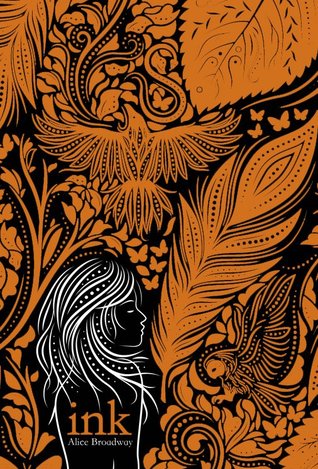
I am absolutely thrilled to welcome the author of the Ink, Alice Broadway to the blog.  Alice is sharing some of the ideas and inspiration behind her brilliant debut novel Ink and the writing process in general.  Thank you Alice for joining us!

I just have to say this loudly – I LOVED INK! Couldn’t put it down. For the benefit of those poor people (!) who haven’t read it yet, tell us a bit about it. That makes me so happy – thank you! Ink is set in Saintstone: a world where all your good and bad deeds, all your successes and failures are tattooed onto your skin. Everyone can look at you and know all about you. The purpose of life in Saintstone is to be remembered after you die – and only the worthy deserve this honour. If you are counted worthy after your death your tattoos are preserved in a skin book for your family to keep forever. Ink tells the story of Leora who is sixteen; her Dad has just died and when she looks at his skin book she realises a mark is missing and then everything she thought she knew unravels.

In Ink, people’s memories and significant life moments are tattooed on their skin to create a record of their life story: what was the inspiration for this idea and how did you go about researching it? It’s hard to put my finger on an exact inspiration, but I am definitely indebted to Ancient Egypt: I’m so fascinated by their approach to death and their ways of honouring the dead and their physical bodies. I love anything that makes me think twice about people’s motivations and I’m also really intrigued by the way we present our lives to near strangers on social media.

The world you create is very real, as are the people in it. I loved the use of fables to illustrate the history of Saintstone and where the people’s beliefs come from.   It’s impressive enough to write a novel, let alone the fables within the story too – how did you go about writing them? If I’m facing writer’s block, my solution is to write or dream up a fable. There is something about the magic and gruesomeness of old traditional tales like Grimm’s that captures the idea of story for me. I sometimes work through my own difficulties by creating a fairytale-esque story. Is that weird?! I also come from a background of deep religious faith (although my own faith is very confused!) and I see story as the backbone of so many spiritual worldviews and I wanted this to be represented in Ink.

Leora has some really interesting relationships with the other central female characters in the story – her mother, her best friend and her mentor. Did your own relationships with female relatives and friends inform this? For me, relationships are the things that either cause you to flourish or to fold. I am very lucky to have good female friends, family and role models. I don’t feel that any of the relationships in Ink are exactly representative of the lovely people I have in my life, but I really hope I’ve been able to show the way other people can shape your world and thinking. I really like a lot of the characters in Ink and I feel for each of them. I should say that my Mum is much more chilled than Leora’s!

Faith and belief play a central part in Leora’s story; she is clearly grappling with things she feels she should believe versus the reality of what is happening around her. How important do you think faith is in today’s world?  This is something I wrestle with personally, so for me it’s a big thing but I have no idea how it seems to anyone else. I guess we all spend time trying to work out what life means and how to live a life that is really worthwhile. I have experienced both the comfort of a very rigid faith and the freedom of having no faith at all and I wish I could see how other people make their way on this journey.

You’ve talked about your fascination with death and the afterlife in previous interviews. In the book, the people’s ancestors live on through their skin books; the family get to keep (literally) a part of them – perhaps in the same way that some people in our culture keep the ashes of loved ones. Has writing Ink changed your perception of death and keeping memories of loved ones alive? Researching Ink led to some amazing discoveries and one of those was the death positivity movement, which is a non-religious group of people trying to ease the fear of death and normalise what is a very ordinary thing. I’ve been greatly inspired by the words of Caitlyn Doughty who writes and vlogs brilliantly about death, dying and post-death practices. For me it has forced me to think about death and to talk about it more openly. It has made it a little less scary, which has to be a good thing.

The idea of the Blanks (outcasts and people who don’t share the beliefs of the inhabitants of Saintstone) is quite chilling. This is reflective of so many cultures across the world controlled by religious beliefs or where people who don’t share the same ideals – is this something you wanted to address through your novel? My feeling is that we love to create an identity, and belonging to a group gives us that. I’m concerned about the ways our loyalty to our own group can mean refusal to empathise and understand others. I didn’t aim to write a political book but I’m really interested in the ways it’s inspired people to talk about division, prejudice and control.

Ink is your debut novel; tell us a bit about the process of writing – how long it took; highs and lows; anything that kept you going if there was a low point! I’m super aware that all my answers so far have been a bit gloomy, serious and morbid and I really want to be super cheery BUT, I started writing Ink just after I was diagnosed with depression and for me, writing has been a great therapeutic thing. Of course, it also meant there were days I couldn’t write and that it was slow-going. On a much happier note, it has been just amazing to sign with my dream agent (Jo Unwin) and to then be snapped up by Scholastic, and get to work with an incredible editor (Genevieve Herr). Writing is so solitary and once I had other people giving me feedback and helping shape the book I kept feeling like I was cheating! I think getting to work with gifted and brilliant people has been one of the huge pluses – when people see what you’re trying to do and help you make it better it feels like a dream!

It must be a life-changing – writing a novel, being published, reaching so many readers. How does everyday life feel now and what do your family and friends make of your success? I’m still changing nappies and getting woken most nights by the kids! In all the best ways life hasn’t changed a bit but my dad published a blog post after reading Ink and he wrote that ‘it just goes to show that childhood dreams can come true’. I really feel I’m doing my dream job and I couldn’t be more thrilled. My family and friends have been LOVELY and so supportive and sweet. And so far they’ve been excellent at laughing at me being slightly crap at publicity and the like.

Finally, what would you most want to be recorded on your skin if we lived in a society like Saintstone? I’ve been thinking about this so much! For me, the family tree would be crucial but I wish there would be ways of showing more than just how someone is related to you. Family is so much more than blood or marriage and I would love a way to express how much I love those who are precious to me.

Thank you Alice for such brilliant responses and sharing your insight with us.  We wish you every success with Ink and can’t wait for the next book! 

Find out more at www.alice-broadway.com and @alicecrumbs.

Read my review of Ink here!

Spring time quote

Author Interview: Danielle Younge-Ullman

flowers 2

I’m delighted to welcome Danielle Younge-Ullman to the blog today for our spring feature! Her new YA book Everything Beautiful is Not Ruined has just been published by Scholastic and with it’s gorgeous (and very spring -like!) cover is a welcome addition to the TBR shelf!

517uikON98L._SX323_BO1,204,203,200_

Danielle is a novelist, playwright and freelance writer who has always had a passion for books, language and storytelling. Before turning her attention to writing, Danielle studied English and Theatre in Montreal, then worked as professional actor for ten years in her hometown of Toronto.  Danielle is also the author of the YA novel, Lola Carlyle’s 12 Step Romance , and the adult novel, Falling Under.

It’s great to have you on the blog today Danielle. I love the title of your latest book! Tell us what Everything Beautiful is not Ruined is about. EVERYTHING BEAUTIFUL IS NOT RUINED is about a teenage girl, Ingrid Burke, who has promised her mother that she will go to wilderness camp for three weeks in return for the chance to pursue her dream during her senior year of high school. But once Ingrid gets to the “camp” she discovers that the whole thing is much worse than she expected it to be. It’s more like a bootcamp, and her fellow campers all seem to be really messed up–not the “kids with leadership potential” she was expecting. Ingrid details many of the hilarious/gruesome/harrowing details of the wilderness program in sarcastic letters to her mother, written in a journal she has with her on the trip, and tells the rest of the story in first person pov. At the same time, the story of Ingrid and her opera star mother, Margot-Sophia, is woven in via alternating chapters. As both stories progress, you start to get to the heart of why Margot-Sophia really sent Ingrid on this gruelling wilderness adventure.

The story has been described as a “gorgeous novel about mothers and daughters”.  Did your relationship with your own mother inspire your writing? Yes and no. I am really close with my mom, and always have been. We’ve been through some hard times, and that brought us closer. Those times gave me an intense admiration for her strength, but also a heightened sense of her fragility. Our life is nothing like Margot-Sophia and Ingrid’s life, and my mom is nothing like Margot-Sophia, but I have experienced a similar weight of fear and worry over my mom’s well being and an almost crippling sense of responsibility–even though my mom was not expecting or asking me to feel responsible. Because of this, when I got to be an older teen, and then even into my twenties, I found it really hard to draw the line between her wants and needs, and my own. I found myself making the choices that I knew would make her feel safer, more peaceful, and sometimes those were not the right choices for me. It took me a long time (and some therapy) to figure out how to detach, how to have my own sense of self, how to have the courage to do things that might freak her out (become and actress, become a writer, etc) because they were what I needed to do. And did manage it, and we remain very close, but now I am aware of us as separate people. This mother-daughter disentangling was part of what I wanted to explore in this story, but I did it with characters who are not us, and stories that are not ours.

How did you research the setting of a trek through the wilderness?! I actually went on a trip very similar to Peak Wilderness as a teen, (and against my will, btw) so many of the physical circumstances of the hiking portion of EVERYTHING BEAUTIFUL IS NOT RUINED are taken directly from my experience. I have not done much canoeing though, so I interviewed a young cousin of mine who has done a ton of camping and canoeing to get more detail and make sure I was using correct terminology.

Some of the narrative is in the form of letters.  Letter writing is almost a lost art-form! Why did you decide to write the novel in this way? The novel started with the letters, and they came so easily and were so much fun to write. They were the jumping off point and then really became the heart and soul of the story.

Do you aim to ensure a positive message for teens reading your books when you’re writing about issues such as depression and complicated family relationships? I always want to give positive messages, but I am careful that they’re not fake-positive messages, if that makes sense. I want to be real and honest with my readers. I wanted to send a message of survival with this book–the message that you may be going through hard times, that you may not feel (or be) in control of your circumstances, or of the people you love, but you can survive almost anything, and come out stronger and wiser in the end. I hope I am also just letting readers know they are not alone when they are suffering–that others have gone and are going through similar things. And I guess another important thing I wanted to convey is that when someone you love is dealing with depression or mental illness this can be overwhelming and take over your life as well as theirs, but YOU, and your needs, wants and dreams are still important, are more important than ever, in fact. Those dreams, the goals you have, they will help to pull you out of the depths of despair and out of your circumstances, they will help you find meaning, they will help you survive…so don’t give the dreams up and don’t give up on yourself, ever.

You studied English and Theatre at University and worked as actor.  What led you to becoming a writer? I loved being an actor and doing theatre, and that’s a big part of what led me to become a writer. Studying theatre is studying the human condition, life, storytelling. Everything you do as an actor to get into the skin of a character you’re going to play, and to try to understand and interpret the intentions of the playwright and then the director–all of that is extremely useful to the writing process. Some of it is exactly the same as the writing process.

What happened for me was that I had always secretly dreamed of being a writer, but I didn’t think I had the talent or self-discipline. I started getting frustrated with the kinds of roles that were available to me as an actor, and decided to try to write something for myself to act in. I wrote a play, discovered I was actually not too bad at writing and that I enjoyed it, and then I was still thinking I’d like to try writing a book, but thinking I was too lazy. Then I read a kind of…not-great book, and thought to myself, “Well, surely I could do at least as well as that!” And that convinced me to give it a shot. Once I started, I quickly realized that this is what I needed to be doing, and over the next couple of years I transitioned out of acting and into writing.

This is your second YA novel and you’ve written for adults too. For you, does the writing process differ when writing for different audiences? The result may be different, but the process is not. Whatever story I’m writing, I write from the point of view of my characters. I work to see the world through their eyes, think their thoughts, write their actions. (This is the same thing you do as an actor, and that’s how I learned it.) The first YA book I wrote, LOLA CARLYLE’S 12 STEP ROMANCE, was very different from my previous work, which was for adults. A lot of readers thought the lighter, funnier tone was created because the book was for teens, but that’s not true. The lighter, funnier tone came about because of the main character, and her way of looking at the world…and if I were to write a story about her as an adult, for adults, it would still have that same tone because of who she is. So, the tone and perspective changes from book to book, but to me that’s not about the age of my reader, it’s about the age of the character I’m writing about.

Also, I don’t think of a teen audience being drastically different from an adult audience. When I was a teen I was reading everything–adult books, middle grade books, teen books–whatever interested me. And I wasn’t into in being told what category of book was “for me” or “not for me”–all the books were for me! I think of my readers being the same way, and just try to tell the story as best I can.

Finally, what would your three top tips be for anyone writing for a YA audience?

1: Do not write down to them. (See above.)

2: Dig deep, so as to find something that really matters to you to write about.

3: Be creative.

Thanks so much for having me on the blog, Victoria!

Thank you Danielle, for such brilliant words of advice and sharing your inspiration for your new book!

Find out more at www.danielleyoungeullman.com and follow Danielle on Twitter . With thanks to Scholastic for my copy of Everything Beautiful is Not Ruined. Read my review here!

Spring time quote

Just in time for spring: it’s a publishing day!

flowers 2

There are some great authors celebrating their book birthdays today – just in time for spring!  Have a look at these and you may just find you want to add to your TBR shelf!

berlin-love-song_3

A Berlin Love Song by Sarah Matthias (YA)

Max is a German schoolboy, when he first meets Lili, a trapeze artist from a travelling circus that performs every year in Berlin.  Lili is a Romani and her life and customs are very different from those of Max and his family.  Their friendship turns into love, but love between a German and a Romani is definitely forbidden. As Max is conscripted into the SS and war tears them apart, can their love survive?  

Set against the backdrop of the Second World War, this is a love story of passion, unexpected friendship, despair, loss and hope.

Having thoroughly enjoyed a sampler of A Berlin Love Song, I can’t wait to read the novel. I love the idea of a circus as the setting for a novel – there’s something very romantic about it. And what a gorgeous cover!  Described as ‘beautifully written and meticulously researched’, this story also reflects on what has been referred to as the ‘forgotten Holocaust’ – Hitler’s persecution of the Roma people.  Forbidden love is a theme often seen in YA novels; from the extract I’ve enjoyed, A Berlin Love Song speaks with a passionate voice.

Published by Troika Books, MD Martin West says of Sarah Matthias: “Like the best writers of historical fiction, Sarah brings the past vividly to life. A celebration of the Romani way of life, and the powerful, moving story of two individuals caught up in history, this is one of the most compelling and moving stories you will read all year.”

With thanks to Troika Books for my copy of A Berlin Love Song. 

flowers 2

tumblr_omx6sdFKJQ1qzye0so1_1280

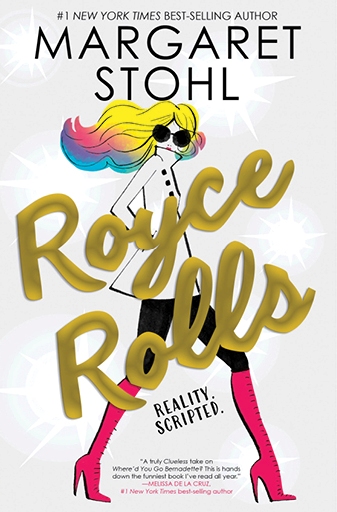
Royce Rolls by Margaret Stohl (YA)

Sixteen-year-old Bentley Royce has it all: a hit reality show about her family, a mansion, adoring paparazzi, and everything else that comes with the red-carpet ride of a true LA star.  But after five seasons on ‘Rolling with the Royces’ – and OMG dealing with her narcissistic sister Porsche, a media-obsessed mother Mercedes and gambling addicted brother Maybach – Bentley wants out.  

Luckily for her, without a hook for season six, cancellation is looming and freedom is on the horizon. But as Bentley’s family starts to crumble one thing becomes startlingly clear: without the show, there is no family. Then things starts to get real.  Really real, like, not reality-show real.

Margaret Stohl is the co-author of the New York Times bestselling Beautiful Creatures series. She grew-up in the shadow of Hollywood so was well-placed to be inspired in all things fame and celebrity! In an age where reality TV consumes the channels, I expect this novel will be very well-received by its intended teen audience.  Out in paperback today published by Bloomsbury, Royce Rolls promises to be a “laugh-out-loud funny romp with a twist of mystery”.  With all those crazy names, I think it will be!

Thank you to Bloomsbury for my copy of Royce Rolls.

flowers 2

30220948

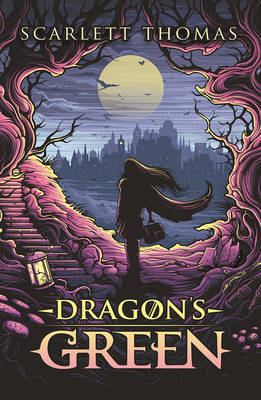
Dragon’s Green by Scarlett Thomas (Age 9+)

Effie Truelove is a pupil at the Tusitala School for the Gifted, Troubled and Strange. When her grandfather is brutally attacked, Effie promises to look after his magical books. But then shady book-collector Leonard Levar gets hold of them and Efiie has to embark on the most dangerous adventure of her life…

I am very excited about reading this story!  Not only are the initial pre-publication reviews impressive (‘The most exciting debut in children’s fiction since Harry Potter’ Joanne Harris; ‘An enthralling tale, set in a sprawling world that swallowed me whole’ Kiran Millwood Hargrave), the story includes evil publishers, ominous booksellers, magical worlds and secret powers. A pretty enticing combination for a book-ish person! Aimed at 9-12 year olds, this story promises to ‘remind you of the joyous power of reading and the adventures that await’.

Published in hardback today by Canongate, this is the first book for children by Scarlett Thomas, who has also written great books for adults.

With thanks to Catherine Ward for arranging my copy of Dragon’s Green

flowers 2

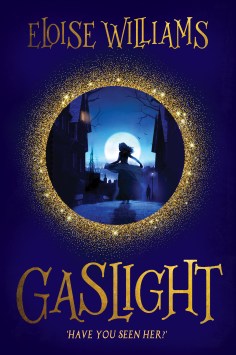
Gaslight-V7_RGB

Gaslight by Eloise Williams (Age 9+)

1899. All Nansi knows is that her mother disappeared on the day she was fished out of the docks. She can’t remember anything else. Now, with no family to turn to, she works for Sid at the Empire Theatre, sometimes legally, sometimes thieving, trying to earn enough money to hire a detective to search for her mother.

Everything changes when Constance and Violet join the theatre.  Nansi is forced to be part of Violet’s crooked psychic act.  But it’s Constance who is keeping real secrets. Nansi is about to learn that her world is even more dangerous that she realised. Can she save her mother? Can she save herself?

Gaslight is Eloise William’s second novel, aimed at 9-12 year olds.  The beautiful cover is inviting enough, but add to this the mystery, historical setting and backdrop of a theatre, it sounds fantastic.  Described as a ‘darkly delicious romp’ and ‘gorgeously raw and Dickensian’ and with a heroine who sounds suitably brave, I have a feeling I’m going to enjoy it.  Gaslight is published today by Firefly Press, who suggest that fans of Emma Carroll and Katherine Woodfine will love it!

With thanks to Firefly Press for my copy of this book.

I think I’ve got some reading to do…..!

Happy Book Birthday!

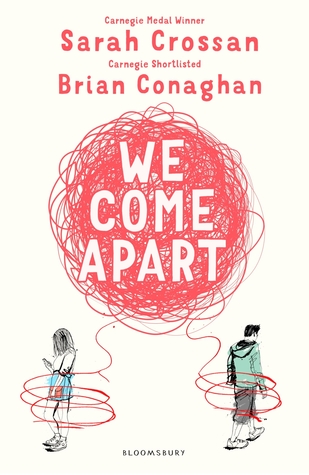
We Come Apart by Sarah Crossan & Brian Conaghan

We Come Apart by Sarah Crossan & Brian Conaghan25310356

Nicu is so not Jess’ type.  He’s all big eyes and ill-fitting clothes, eager as a puppy, even when they’re picking up litter in the park for community service. Appearances matter to Jess. She has a lot to hide.

Nicu shouldn’t even be looking at Jess. His parents are planning his marriage to a girl he’s never met back home in Romania. But he wants to work hard, do better, stay here. As they grow closer, their secrets surface like bruises. And as the world around them grows more hostile, the only safe place Jess and Nicu have is with each other.

Nicu and Jess may be at the same school but couldn’t be further apart when it comes to their backgrounds. Or at least that’s how it seems. Nicu is an immigrant but also a Roma Gypsy and the actions of the school bullies towards him are vile. Equally vile is the treatment of Jess and her mother by Jess’ step-father, a daily trauma Jess is desperate to hide and desperate to escape from.  Jess and Nicu meet properly when they end up on a community service programme.  For Nicu, it’s almost love at first sight when he sees Jess; for Jess, can she really be friends with someone who’s always a target for her mates’ bullying?  Both have secrets they want to hide. As their paths collide, what at first seemed marked differences soon become the threads that hold them together.  Nicu and Jess’ momentary solace in each other is short-lived and their troubles soon spill over to interfere with their plans of escape.  With prejudice, hate and fear driving those around them, how can Nicu and Jess protect themselves and each other from the inevitable outcome?

We Come Apart  is a brilliantly told story reflecting the somewhat grim reality of life as an immigrant and as a delinquent teen. Gritty and full of emotion the two central characters, Jess and Nicu, keep you utterly hooked. Having worked in schools for ten years, I have come across teenagers like them; they were totally believable. I found Nicu utterly endearing, very sweet and funny.  Being a Roma gypsy, an outcast in his own society too, he seems more hardened to prejudice than some and perhaps this is why he still wants to stay in London despite being treated so badly here. Or perhaps it’s just the lesser of two evils; the other being an arranged marriage in his home country.  Jess is someone your heart aches for; a ‘messed-up’ teen in the eyes of the world – but who wouldn’t be with such a despicable step-father to deal with?  I’ve met teenagers like her who just can’t seem to move forward, don’t want to be ‘helped’ and who act so tough but on the inside are quietly screaming. She is difficult to warm to, seeming somewhat cold-hearted, but when you understand her situation your empathy for her grows.

The authors brilliantly capture teenage angst, the differences that drive many teenagers to make bad choices and how situations can escalate as a result of these choices.  The thread of humour running through the narrative thankfully lightens the mood. But the sense of calamity surrounding Nicu and Jess’ blossoming romance is apparent from the start, making the good moments they share all the more meaningful.  It also makes the hope they find in each other more significant.   Written in verse, We Come Apart may well be an ‘easier’, shorter read, but the authors ensure every single word counts in order to create the empathy and understanding so clearly felt whilst reading it. This story is all too relevant today, tackling issues of abuse, racial bullying, knife-crime and teenage delinquency. Definitely one for YA readers, and indeed adults, it should be read to understand how prejudice of all kinds can affect young people and the danger of making assumptions about those around us.  Just because our own lives may not be touched by prejudice or abuse does not mean we should stand back and do nothing about those whose lives are.

Find out more at www.bloomsbury.com or on Twitter @BrianConaghan  or @SarahCrossan

I was delighted to purchase this copy of We Come Apart at the launch evening at Waterstones in Brighton. Thank you to Sarah Crossan and Brian Conaghan for signing it for me.

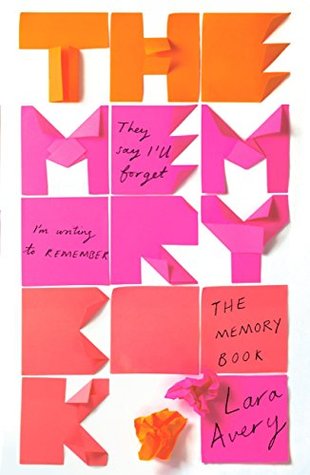
The Memory Book by Lara Avery

the-memory-book-coverSam McCoy is 17.  Sam McCoy was going to be someone – and then she became ill.  Now, she must figure out who she is…..

Told in a diary style narrative, The Memory Book follows Sam McCoy as she deals with a life-changing illness.  Diagnosed with Niemann-Pick, a form of dementia, Sam will inevitably lose her memory.  Determined to give herself the best possible chance of remembering who she is, Sam starts a memory book, like a diary, telling her future self (Future Sam) who she is and what she wants from life.  As she writes, Sam discovers the plans she has made for herself – winning the Nationals, making the Valedictorian speech and going to NYU – are less and less likely to be achieved but with dogged determination she fights her way forward.  Sam’s friends and family provide some support and advice but it’s not always welcome; her illness affects them too.  As it progresses, Sam has less and less freedom, which for a teenager desperate to break free is increasingly frustrating.  Sam starts to realise perhaps she isn’t the person she thought she was and it’s only through the memory book that her true self is revealed.

The Memory Book is an utterly compelling young adult story and I read it in one sitting, staying up till 1am to finish it.  In practical terms, it’s very easy to read with some ‘chapters’ only one line long (so a good choice for teens who don’t want to read a ‘long’ book).  But in emotional terms, it’s heart-wrenching, with the final scenes in particular causing a flood of tears.  I loved Sam; she’s bold and brave and totally inspiring considering what she is facing.  I loved her debate partner Maddie; who takes no prisoners and says it like it is – causing conflict here and there.  I loved Coop; the unassuming, ‘dope-smoker’ from next door, who turns out to be *spoiler alert* the best friend a girl could have.  Sam’s family (Mum and Dad, a brother and two sisters, all younger) are introduced to us through childhood memories as well as ‘current’ moments and Sam’s own predictions of what she thinks her siblings will be like in the future.  Particularly poignant is the scene where Sam lapses into memory loss and ‘forgets’ one of her sisters – with her sister understandably distraught at being ‘forgotten’ even if only temporarily.  Sam’s parents work hard to pay the inevitable medical bills and to stay strong through the horrendous ordeal of watching their child’s health deteriorate.  Through the various relationships Sam has, including with Stuart Shah her schoolgirl crush, the journey of self-discovery is significant. As the reader, you rejoice with her when she manages to achieve some of her goals, mourn those she can’t and feel absolute heartache as her “body is failing”.  Slowly, Sam starts to realise those things she placed so much hope in are not as important as she thought.  This realisation helps her to embrace the life she now has and do her best to enjoy it; a lesson we can all learn along with her.the-memory-book-cover

As a mother myself, I cannot bear the thought of having my sons going through an illness like this. It’s bad enough when they have the flu – you’d do anything to make them feel better.  Magnify this by about a million and that is how I imagine Sam’s mother to feel.  Her words to Sam, her eldest daughter, written in The Memory Book are just beautiful.   The story of Sam McCoy will stay with you long after reading.

Also reviewed for the Reading Zone. Thank you to Quercus for sending me this book.