
 I’m kicking off the autumn term on the blog with the first stop on the blog tour for Spylark by Danny Rurlander. What a great way to bring in the new term! Spylark is a fantastic middle-grade thriller full of adventure, lots of action and some great characters – not to mention a really cool and clever idea at the heart of the story! Spylark is set in the author’s native Lake District and uses the islands that inspired Swallows and Amazons as the backdrop. Danny Rurlander’s debut novel is a perfect adventure of the absolutely classic kind. With themes about the importance of friendship, bravery, terrorism and technology, readers will be swept up into the daring mission to save a Very Important Person from assassination. A thoroughly riveting read, Spylark is a must for middle grade bookshelves!
 Danny Rurlander studied English Literature at the University of East Anglia, and worked in the finance sector for several years. He now serves on the staff team of a multi-cultural, city-centre church. While at University Danny spent two years learning to fly with RAF, as an officer cadet in the Cambridge University Air Squadron. He has lived in Austria, Kenya, Devon and Australia, but always longed to return to his native Lake District where he grew up exploring the fells and camping on islands, so it’s no wonder his descriptions of the landscape where Spylark is set are so real! I’m delighted to welcome Danny to the blog today to share some insight into what inspiration means to him.
Inspiration
“There’s a moment, roughly half way through the book, when Jim Rothwell, an older man whose wisdom and life experience help the child protagonists navigate some of the trickier moments of their adventure, offers a challenging view of love.
‘Joel, my lad, love is not always a feeling. Sometimes it’s a decision.’
This down to earth and counter-intuitive idea of love is also true, in my experience, of ‘inspiration’. Inspiration, for the fiction writer, is not so much a feeling, but a decision, an act of the will. If you sit around waiting for it to turn up, you’ll never write anything. But where does inspiration come from? The answer is so obvious it seems almost unnecessary to say it. Inspiration comes from two spheres: what you already know and what you don’t know, but know you need to know.
In writing Spylark a number of key influences and experiences (the first sphere of inspiration) found their way into the book: my own childhood adventures in the part of the world where the book is set; a first-hand knowledge of flying aeroplanes gained through my time with the RAF; and perhaps most of all, memories of books I read as a child. In particular I grew up not only reading Arthur Ransome’s Swallows and Amazons adventures but trying to live them out!
Spylark is a classic action-adventure thriller, involving spies, criminals, and a group of child heroes who save the day. But the book plays with this genre by means of a key technological concept. Tom, the main character, who has suffered a life-changing accident several years before the story begins, ‘escapes’ the harsh realities of his life by means of his home made drone. This enables him to be in two places at once, and enables the narrative to switch between locations in the blink of an eye.
This brings me to the second source of inspiration – what you don’t know, but know you need to know. Before I started I knew nothing at all about drones. So I had to find out enough to make the story convincing. Writers traditionally call this ‘research’ but that has always sounded rather outfacing and dull when you are itching to get going with the story. I prefer to think of it as fueling the tanks for the creative energy of writing.
The internet makes this easy of course. I subscribed to a few drone blogs to understand the technical stuff. I then tried to get my head around what could actually be possible, and how a terrorist might use this technology for destructive purposes. (At one stage if – for some reason – my hard drive had been examined by the police, it could have looked rather suspicious!) But it’s a good idea not to rely too heavily on Google. I also bought a book on drones, went out to the local beach to watch people flying them, and met up with a local enthusiast to watch him at work and ask him questions.
The key to this is not to think of what you don’t know as a barrier but an opportunity. I often say that writers are nosey-parkers! They learn to listen in on other people’s conversations on the bus; they observe the world around them in fine detail, tune into the stories of other people’s lives and actively imagine the world from someone else’s point of view. After all, one of the reasons children read is to learn about what they don’t know. If as a writer you can learn something new, the chances are the story will be even more vivid and fresh than those that come from your experience.”
Find out more at dannyrurlander.com and chickenhousebooks.com. SPYLARK by Danny Rurlander is out now in paperback (£6.99, Chicken House)
With thanks to Chicken House for sending me this book to review. Be sure to follow the rest of the blog tour:





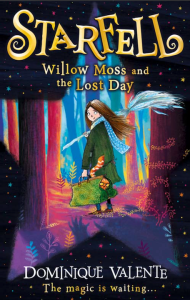 Today I’m hosting the final stop on the blog tour for Starfell by Dominique Valente. I’m delighted to welcome Dominique to the blog with a guest post on writing – even when you are feeling least inspired. Many will identify with the dreaded writers block, but Dominique has some great tips for getting past it.
 “When I first discovered my love for writing I’d sit down for hours happily creating a magical world, never once wondering what an end reader would think. And then I started writing for a living. Having to expose my thoughts and ideas for someone to judge or correct, was tough. I’m not going to lie. But it was good for me. I learn the hard way, which isn’t good – and so often, the only way I improve is with tough love.

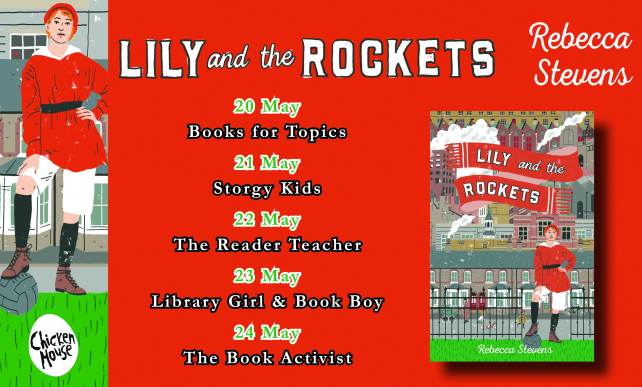
 It’s 1918. Lily spends her days working in a munitions factory, her nights picking metal out of her hair, and her lunchtimes kicking a ball with her workmates. Together they form a football team, the Rockets, and a league soon follows. But when the war ends, the girls lose both their jobs and their football. Not Lily. If her only chance of being a goalie is to play with the men, then that’s what she’ll do.




 “A confession. I am bad at answering questions about my books. Sometimes it’s the fault of the questioner. For example, there is no good answer to the poser ‘what kind of book is it?’ But mostly the problem lies with my own awkwardness, embarrassment and congenital inability to talk about my writing without feeling like a complete tool.
 thebookactivist