Tag Archives: Authors

Spring special round up!

Spring time quote 3

I’ve had a lovely few weeks finding out just some of what’s new and coming soon from the world of children’s books.  Thank you to all those who’ve joined the blog over the last month and shared some book-ish inspiration; it’s great to see there’s so much to celebrate in the world of children’s and YA literature. We started with stargazing and ended with bananas and Beyonce!! With reviews, introductions to debut novels and author interviews, it’s been a busy month.

A snapshot of our spring special interviews:

“I want my books to feel ‘realistic’ and address genuine challenges, but I also want to them to entertain and provide a certain amount of escapism for the reader.” Jenny McLachlan, author.

“When you get right down to it, every child is different but they all deserve the chance to become readers” Hannah Rolls, Editor, Bloomsbury

“..I think hope is important, because stories can be there to guide us through difficult times. They are a light in the darkness, and so it’s important not to switch out the light.” Gill Lewis, author.

“I’m concerned about the ways our loyalty to our own group can mean refusal to empathise and understand others.” Alice Broadway, author.

“Throw all the bad stuff you’ve got at your main character… and then make it even worse.” Simon James Green, author.

“Publishing is the most glorious random thing; no one really knows what will be ‘the next big thing’!” Rachel Hickman, author & Deputy MD of Chicken House

“Writing is a skill like any other–one which you get better and better the more you do. If your first attempt doesn’t quite make it, try again.” Hayley Barker, author.

“There’s so much to learn from hearing authors speak live about their writing, their influences and their experiences.” Victoria Henderson, Director of Chiddingstone Castle Literary Festival.

With an ever growing TBR shelf, look out for lots of new reviews coming soon!.  Thank you to all the publishers for sending me these books to review:


Author Interview: Simon James Green

9781407179940.jpg

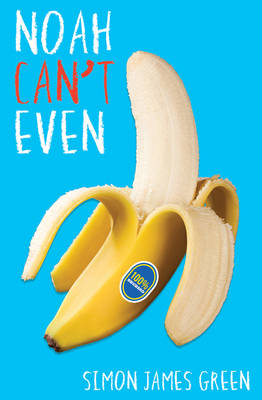
Simon James Green is the author of Noah Can’t Even, a story described as “snort-laugh-out-loud” funny!  Simon was an Undiscovered Voices finalist in 2016 and is also a screenwriter and director; Noah Can’t Even is his first novel and will be published by Scholastic on 4th May.  I’m delighted to welcome Simon to the blog today; thank you for joining us!

You can’t help but smile when you see the cover of ‘Noah Can’t Even’! Tell us what the story is about. It’s a funny, sweet, coming-of-age (and coming out) story about learning to be brave enough to be yourself. On the cusp of his 16th birthday, Noah longs to be accepted by his cool classmates. He thinks one way to social success might be to kiss Sophie, the most fabulous girl in the school. But Noah’s plans go awry when his best mate, Harry, kisses him instead and a chain of events is unleashed that turns Noah’s life upside down – with laugh-out-loud consequences!

What was the inspiration behind the central character Noah? Admittedly, there’s quite a lot of me in Noah. We both grew up in small towns and I certainly wasn’t one of the cool kids at school either. We also both have slightly geeky obsessions with Agatha Christie, although I must point out that my mum has never done a Beyoncé tribute act! Growing up is all about working out who you are and what you want to be, and sometimes that takes a certain amount of bravery. I wanted Noah to be dealing with those types of issues and be battling with feelings that he couldn’t (or refused to) understand. Noah worries about fitting in; he has that need to be accepted and liked, and he ties himself up in knots worrying about what people think about him. You eventually reach a point in life where you couldn’t give a damn about any of that, but for Noah, it’s a very real concern. Finally, when I think about my own teenage years, and when I think about why I love writing about this age group so much, it’s the fact so much of what you experience feels heightened. That’s probably because you’re being faced with a lot of things for the first time and you don’t always have the experience to know how to deal with it and know it’ll all work out OK. As a result, you make rash, irrational and sometimes plain crazy decisions. Of course, making those mistakes is how you learn, but in the meantime, it’s often comedy gold! (Although at the time, I definitely was not laughing!)

You were selected for the SCBWI’s Undiscovered Voices 2016 – this must have been very exciting; how did this come about? UV was such a fantastic experience! Two people really encouraged me to apply – my friend, the author Katie Dale, and my editor at the Golden Egg Academy, Jenny Glencross. I sent in the first two chapters and was staggered when I was not only long-listed, but then was actually one of the winners who would be included in the anthology. From there I was contacted by over 20 agents in both the UK and USA, who all wanted to read the full manuscript and within 7 months I’d signed with Jo Moult at Skylark Literary and had a book deal with Scholastic. I mean, it’s a fairy tale, right? It was such a fast, exciting, roller coaster of an experience and I’m so grateful to everyone at UV for everything they’ve done for me. And, to you all writers out there looking for rep, UV is open for submissions for the 2018 anthology, so get submitting – it’s life changing!

How has writing your first novel differed from writing screenplays? One of the key differences is all the extra stuff you need to put into a novel. With a screenplay, you generally allow the actor to interpret the lines and action in order to show the audience how they are feeling and what’s going on for them internally. With a novel, you need to get that on the page a lot more, and that was a big challenge for me at first. I’m also used to a much faster turnaround time with screenplays (I once had to do a rewrite in 48 hours), so it was lovely being able to work on the manuscript for longer than I’m used to.

As a coming-of-age novel, what do you hope readers will gain from reading Noah Can’t EvenFirstly, I really hope people have a good laugh reading Noah Can’t Even. I’m a big fan of funny books and I hope that when the humour in Noah is combined with some of the sweeter moments, it’s a book that gives you all the feels. And that’s what growing up is all about, right? You laugh, you cry… you screw it all up and make it all better again. I hope people read it and think – ‘that’s OK, what I’m going through isn’t completely weird and unusual then.’ But fundamentally, I wrote Noah for the same reason I write screenplays or I direct for stage and TV – I enjoy entertaining people and I hope it makes them happy.

The audience for YA novels is growing, which is great news for all concerned not least those reading the books! Were you a reader when you were a teenager? Yes, massively! I loved Agatha Christie as a teen and read loads of her books, but I also devoured Adrian Mole, The Catcher in the Rye, and most of Stephen Fry’s books, to name just a few of my favourites.

What is the best piece of writing advice you’ve ever received? Throw all the bad stuff you’ve got at your main character… and then make it even worse. That’s exactly what I’ve tried to do with Noah – in every chapter I turn the screws just a little bit more, until he’s basically in an impossible position. It’s a great way to drive the story, up the stakes and keep the reader interested!

And finally….have you got a thing for bananas and Beyonce?! Hasn’t everyone?! Actually, I think ‘Bananas and Beyoncé’ would be a great title should I ever write my autobiography!

Thanks so much Simon for sharing your experiences with us. We wish you every success with Noah Can’t Even!

Find out more at www.simonjamesgreen.com and on Twitter @simonjamesgreen.

Spring time quote

Author Interview: Hayley Barker

Show Stopper.jpg

Hayley Barker’s debut novel Show Stopper will be published by Scholastic on 1st June 2017.  Described by her editor, Lauren Fortune, as “dazzling and dark, heartbreaking and heart-racing” Show Stopper is a YA novel set in a dark and not so death defying circus.  I’m very excited to welcome Hayley to the blog today to tell us all about her new novel and the inspiration behind it.  Thank you for joining us today Hayley!

Show Stopper sounds thrilling – I’m looking forward to reading it! Tell us about your inspiration for the book. Thank you so much! When I was younger, I loved reading circus stories. The circus always seemed to be an almost magical place, one which operated outside of the normal rules of society, and the life the circus folk lead was so exciting -free and wild and wonderful. Because of that, I had been thinking for a while that I would really like to write my own story set in the circus.

When I started writing Show Stopper, there were lots of reports in the media about the growing wave of hostility towards ethnic minorities and immigrants in England. Groups with extreme right wing views were gaining momentum, not just in England, but across Europe, and the right wing press was becoming more and more vocal in its suggestions that the faults of the country all lay at the hands of immigrants. It made me feel worried about where we were heading and I wanted to try address this concern in some way in my writing. The two ideas merged in my mind and the concept of a truly terrible circus, which is far from magical, was formed.

You’ve chosen a unique setting for the novel. What research did you do to inform creating the setting of a circus? It must have been fascinating! I read a few books about the traditional circuses of the past and researched anything else I needed to know about as I was writing. If anyone was to look at my internet search history, there would be some bizarre and slightly disturbing results on there! Subjects I’ve researched include, medieval torture methods, how Tasers work, ways in which the Nazis used the body parts of people they had exterminated in the concentration camps, and traditional and extreme circus acts. In the book, Hoshiko balances a stool on the high wire and then stands on it. Believe it or not, this is not only possible but has been done before – you can watch someone do the very same thing on Ukraine’s Got Talent on YouTube!

Tell us about Show Stoppers’ protagonists – Ben and Hoshiko, who have very different backgrounds.  Ben is a Pure, one of the leading elite in the country. His mother is a really important political figure with leadership aspirations, and he is surrounded by people who hate the Dregs– the suppressed underclass of Immigrants and ethnic minorities. He befriends a Dreg servant, Priya, and begins to question everything has been told about the Dregs being inferior. When he goes to the Cirque and sees Hoshiko, he is captivated by her and determines to rescue her from her terrible fate.

Hoshiko is the star of the show, a brilliant high wire and trapeze artiste. She has been witness to the torture and murder of many of the people she cared about and she herself experiences horror on a nightly basis. She is fiercely loyal to her friends in the circus and feels trapped and embittered about the life they are forced to lead, and angry and resentful towards the Pures. When Ben tries to befriend, and then rescue her, she is far from grateful, but slowly comes to see that not all Pures are prejudiced and cruel.

Did you always intend on including a romance or did that evolve? I did always want the story to have a romance at its heart. I felt like a lot of YA fiction included love triangles or one-sided relationships. I wanted a Romeo and Juliet style love story, one about love at first sight which becomes deeper, a love which redeems and heals. The overall message of the novel is that love is stronger than hate, and that we can always change things if we are determined enough. I think that message, while certainly not a new one, is important and true.

You’ve been a secondary school teacher for 18 years. How has this helped you in terms of your insight into writing for a YA audience?  I think any good teacher needs to be able to relate to and understand the people they teach. Young adults don’t deserve to be patronised, they have real concerns and worries and they think deeply at the world they live in. They don’t want to be lectured to and like stories which have a dark and sinister edge. They want page-turners– books which keep them hooked from the start. That was what I tried to achieve when I was writing Show Stopper.

As a debut author, what are your three top tips for anyone starting out on the road to trying to get a book published? My first tip is to believe in yourself: believe you can do it and try, try, try. I think the difference between a pipe dream and an ambition is simply the action you take to fulfil it. The minute you commit to a plan, and do everything you can to achieve it, your dream becomes an ambition – one which is possible and achievable.

My second tip links to the first and it is to keep going in the face of rejection. Writing is a skill like any other–one which you get better and better the more you do. If your first attempt doesn’t quite make it, try again.

My third tip is to go to the Winchester Writers’ festival, or another similar event. I went when I had completed the first draft of Show Stopper and booked four incredibly useful 1-1 appointments with literary agents. Not only did it ensure that that they had all looked carefully at my writing, but I also got lots of illuminating and useful feedback. All four agents were positive about my writing and wanted to see more, which was a real boost and I also got some excellent tips for further improvement.

Thank you Hayley for these fantastic tips and sharing your writing experience with us.

Follow Hayley on Twitter @HayleyABarker.

flowers 2


Author Interview: Alice Broadway

32827036

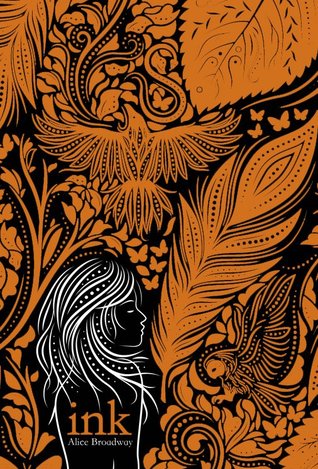
I am absolutely thrilled to welcome the author of the Ink, Alice Broadway to the blog.  Alice is sharing some of the ideas and inspiration behind her brilliant debut novel Ink and the writing process in general.  Thank you Alice for joining us!

I just have to say this loudly – I LOVED INK! Couldn’t put it down. For the benefit of those poor people (!) who haven’t read it yet, tell us a bit about it. That makes me so happy – thank you! Ink is set in Saintstone: a world where all your good and bad deeds, all your successes and failures are tattooed onto your skin. Everyone can look at you and know all about you. The purpose of life in Saintstone is to be remembered after you die – and only the worthy deserve this honour. If you are counted worthy after your death your tattoos are preserved in a skin book for your family to keep forever. Ink tells the story of Leora who is sixteen; her Dad has just died and when she looks at his skin book she realises a mark is missing and then everything she thought she knew unravels.

In Ink, people’s memories and significant life moments are tattooed on their skin to create a record of their life story: what was the inspiration for this idea and how did you go about researching it? It’s hard to put my finger on an exact inspiration, but I am definitely indebted to Ancient Egypt: I’m so fascinated by their approach to death and their ways of honouring the dead and their physical bodies. I love anything that makes me think twice about people’s motivations and I’m also really intrigued by the way we present our lives to near strangers on social media.

The world you create is very real, as are the people in it. I loved the use of fables to illustrate the history of Saintstone and where the people’s beliefs come from.   It’s impressive enough to write a novel, let alone the fables within the story too – how did you go about writing them? If I’m facing writer’s block, my solution is to write or dream up a fable. There is something about the magic and gruesomeness of old traditional tales like Grimm’s that captures the idea of story for me. I sometimes work through my own difficulties by creating a fairytale-esque story. Is that weird?! I also come from a background of deep religious faith (although my own faith is very confused!) and I see story as the backbone of so many spiritual worldviews and I wanted this to be represented in Ink.

Leora has some really interesting relationships with the other central female characters in the story – her mother, her best friend and her mentor. Did your own relationships with female relatives and friends inform this? For me, relationships are the things that either cause you to flourish or to fold. I am very lucky to have good female friends, family and role models. I don’t feel that any of the relationships in Ink are exactly representative of the lovely people I have in my life, but I really hope I’ve been able to show the way other people can shape your world and thinking. I really like a lot of the characters in Ink and I feel for each of them. I should say that my Mum is much more chilled than Leora’s!

Faith and belief play a central part in Leora’s story; she is clearly grappling with things she feels she should believe versus the reality of what is happening around her. How important do you think faith is in today’s world?  This is something I wrestle with personally, so for me it’s a big thing but I have no idea how it seems to anyone else. I guess we all spend time trying to work out what life means and how to live a life that is really worthwhile. I have experienced both the comfort of a very rigid faith and the freedom of having no faith at all and I wish I could see how other people make their way on this journey.

You’ve talked about your fascination with death and the afterlife in previous interviews. In the book, the people’s ancestors live on through their skin books; the family get to keep (literally) a part of them – perhaps in the same way that some people in our culture keep the ashes of loved ones. Has writing Ink changed your perception of death and keeping memories of loved ones alive? Researching Ink led to some amazing discoveries and one of those was the death positivity movement, which is a non-religious group of people trying to ease the fear of death and normalise what is a very ordinary thing. I’ve been greatly inspired by the words of Caitlyn Doughty who writes and vlogs brilliantly about death, dying and post-death practices. For me it has forced me to think about death and to talk about it more openly. It has made it a little less scary, which has to be a good thing.

The idea of the Blanks (outcasts and people who don’t share the beliefs of the inhabitants of Saintstone) is quite chilling. This is reflective of so many cultures across the world controlled by religious beliefs or where people who don’t share the same ideals – is this something you wanted to address through your novel? My feeling is that we love to create an identity, and belonging to a group gives us that. I’m concerned about the ways our loyalty to our own group can mean refusal to empathise and understand others. I didn’t aim to write a political book but I’m really interested in the ways it’s inspired people to talk about division, prejudice and control.

Ink is your debut novel; tell us a bit about the process of writing – how long it took; highs and lows; anything that kept you going if there was a low point! I’m super aware that all my answers so far have been a bit gloomy, serious and morbid and I really want to be super cheery BUT, I started writing Ink just after I was diagnosed with depression and for me, writing has been a great therapeutic thing. Of course, it also meant there were days I couldn’t write and that it was slow-going. On a much happier note, it has been just amazing to sign with my dream agent (Jo Unwin) and to then be snapped up by Scholastic, and get to work with an incredible editor (Genevieve Herr). Writing is so solitary and once I had other people giving me feedback and helping shape the book I kept feeling like I was cheating! I think getting to work with gifted and brilliant people has been one of the huge pluses – when people see what you’re trying to do and help you make it better it feels like a dream!

It must be a life-changing – writing a novel, being published, reaching so many readers. How does everyday life feel now and what do your family and friends make of your success? I’m still changing nappies and getting woken most nights by the kids! In all the best ways life hasn’t changed a bit but my dad published a blog post after reading Ink and he wrote that ‘it just goes to show that childhood dreams can come true’. I really feel I’m doing my dream job and I couldn’t be more thrilled. My family and friends have been LOVELY and so supportive and sweet. And so far they’ve been excellent at laughing at me being slightly crap at publicity and the like.

Finally, what would you most want to be recorded on your skin if we lived in a society like Saintstone? I’ve been thinking about this so much! For me, the family tree would be crucial but I wish there would be ways of showing more than just how someone is related to you. Family is so much more than blood or marriage and I would love a way to express how much I love those who are precious to me.

Thank you Alice for such brilliant responses and sharing your insight with us.  We wish you every success with Ink and can’t wait for the next book! 

Find out more at www.alice-broadway.com and @alicecrumbs.

Read my review of Ink here!

Spring time quote

Chiddingstone Castle Literary Festival 2017: coming soon!

Chiddingstone_Logo_Blue_Brooks_MacDonald (2)Logo_dd_BM_LOGO_-01

Chiddingstone Castle in Kent hosted it’s inaugural Literary Festival in 2016 and was a huge success. A celebration of books and reading for both adults and children, the 2017 festival sponsored by Brooks MacDonald starts on Sunday 30th April.  This year, I’ll be at the festival working alongside Beanstalk for Kent in the Reading Zone, a special area for children and parents to give them lots of reading ideas. I’m also one of the judges for the fantastic Short Story competition for children aged 7-13 (entry now closed) and have had a wonderful time reading the brilliant entries! I’m delighted to welcome Victoria Henderson, Festival Director to the blog today to talk to us about this year’s event which is just under two weeks away. Thanks for joining us Victoria!

The Festival is now in its second year; how did the idea for the festival come about? I was working for the book review website Lovereading as their Literary Festivals Coordinator arranging marketing and sponsorship of festivals all over the country and it suddenly occurred to me that there wasn’t a literary festival where I lived in West Kent. Given we live between Tunbridge Wells, Sevenoaks, Tonbridge and East Grinstead it struck me that Chiddingstone Castle would be the perfect place to hold such an event. I approached the Castle’s Director and Chairman of the Trustees with the idea, and as they say ‘the rest is history’!

Tell us a bit about what visitors can expect this year. This year’s line-up is a wonderful mix of events for adults and children. We’ve tried to find something for everyone, so story-lovers of all ages will be able to enjoy a choice of historical fiction, biography and memoirs, good mood food, education and the Great War, coping with bereavement, the latest on Brexit and Trump and stories of great lives well lived. For children we have a number of theatre performances and storytelling shows including a musical version of The Ugly Duckling, Sock Puppet Theatre performing Shakespeare and a Comic Strip Masterclass. There’s a guided tour of Chiddingstone, delicious food from our tearooms and vintage food vans, reading advice from your good self and Beanstalk for Kent and some surprises too. Our highlights include appearances from Terry Waite, Rev. Richard Coles, Artemis Cooper, Nicholas Crane, Anthony Seldon, Conn Iggulden, Alison Weir and children’s authors Piers Torday, Lauren St John and A F Harrold.

It’s a big operation coordinating an event on this scale. Do you have help?! We are a small team of 4 (myself – former Publicity Manager at various publishing companies, Mark Streatfeild – retired International Sales Director at Orion, Ali Ditzel – Director of the Castle, and Lisa Prifti – Sponsorship) but we have a wonderful number of smiley volunteers who help out over the 3 days of the festival – manning the box office, checking tickets, parking cars, meeting and greeting our authors, performers and members of our lovely audience.

The festival has a fantastic line-up of authors; do you follow a particular theme or idea when putting the programme together? We don’t have a particular theme as we’re keen to give a really good spread of events and interests. Both Mark and I previously worked in publishing so we still have contacts we can call on for advanced information on up-coming books. Some authors are suggested to us, some we have spotted and chased up and some approach us.

The festival includes a day especially for schools; which is brilliant! Why did you decide to have this? I felt it was really important that we provide an opportunity for local schools and pupils to have access to some exciting children’s authors who they may not otherwise have seen or heard. We’ve chosen authors who are great performers and who will enthuse young people with their love of writing and storytelling.

Is there anything you’re particularly excited about for this year? On the adults’ side, I’m particularly thrilled to have grief therapist Julia Samuel in conversation with Guardian journalist Decca Aitkenhead whose husband tragically drowned saving one of their children. I think their event will be poignant but inspirational, and encourage people to talk about their grief. We are honoured to have two pre-publication exclusives from two bestselling writers of historical fiction; Alison Weir’s new book on Anne Boleyn and Conn Iggulden’s latest novel Dunstan. We are thrilled to have award-winning children’s author Piers Torday talking about his Last Wild trilogy on our Family Day and about his new novel There May Be A Castle on our Schools Day.

Why do you think it’s important to hold literary events such as these? There’s so much to learn from hearing authors speak about their writing, their influences and their experiences. There’s also something very special about bringing the community together, united by a love of books and good writing in a beautiful location in a historic house in the glorious Kent countryside.

And finally, what would your top three tips be for anyone hoping to organise an event like this?

  1. Location, location, location!
  2. Persevere when seeking out your authors, you’ll get turned down and passed over but follow up every lead
  3. Enthusiasm and hard work…and a belief that it’ll be alright on the night (day)!

Thank you so much for talking to us about the festival; it’s going to be brilliant!

Find out more about the festival programme here and book tickets !